
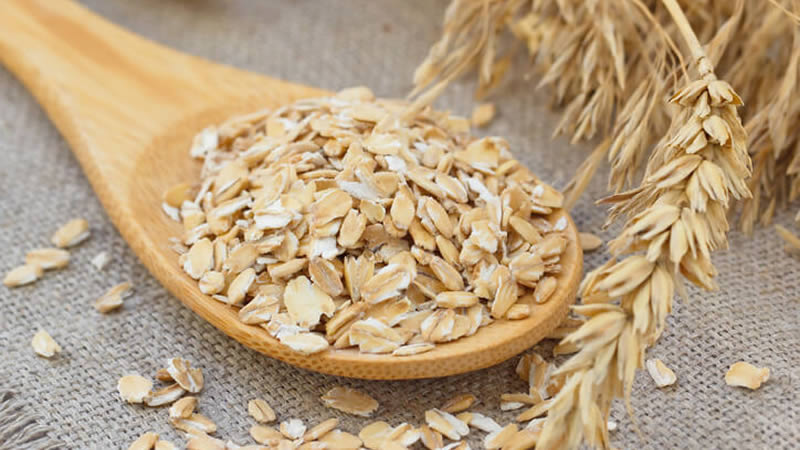
Are oats gluten-free? The answer to this question is not a simple yes or no.
The answer may depend on where and how the oats are grown, processed and packaged. The results of research on this subject can also vary depending on the study design and its limitations.1. Before we delve into these topics let’s understand more about the storage protein in oats that has become a subject of the gluten-free or not debate.
The seeds of common cereal grains contain a group of plant storage proteins called prolamins. Gluten is a mixture of prolamin proteins found in wheat, barley, rye and oats. Each grain has a different set of gluten proteins with structural differences named as follows: gliadin in wheat, hordein in barley, secalin in rye and avenin in oats.2. The percentage of avenins in oats is significantly less than the percentage of gluten proteins in wheat, barley and rye and this percentage can also vary from one cultivar to the next.3.
Diversity of oats
Due to varying genetics, the structure and percentage of avenins in the oat grains can differ between cultivars. Recent studies have shown that there is a strong association between the oat cultivar type and whether a coeliac patient experiences an adverse reaction or not.4.
Purity of oats
Oats can become contaminated by wheat, barley and rye if they are produced, stored, processed or packaged in the same place. This is referred to as cross-contamination. Oats labelled as gluten-free can be done so if they have no cross-contamination and test at 20 parts per million (ppm) gluten or less in the UK, Europe and USA.5. Oats and food containing oats may not be labelled as gluten-free in Australia and New Zealand even if they are pure.6.
Research on oats
Studies are showing contradictory results regarding the toxicity of oats on patients with coeliac disease. Some coeliac patients have an adverse reaction to oat avenins and some do not. The variability in oat cultivars, the purity of the oats, the different measurability levels of determining oats as gluten free in different countries, the study design as well as the different levels of sensitivities to gluten in patients make it difficult to establish consistent and conclusive results.1.4.
General consensus
Despite the varying results of the toxicity of oats, the general consensus is that a low percentage of the population experience a sensitivity or adverse reaction to oats. According to a report by Food Standards Australia New Zealand (FSANZ) “approximately 15% of Coeliac sufferers who ate oats reacted symptomatically”.7. The University of Chicago coeliac Disease Center indicate less than 1% of coeliac patients show a reaction to a large amount of oats in their diets.8. Hardy et al. (2014) observed an immune system response in 8% of patients with Coeliac Disease.9.
Removing oats from your diet
Oats have many health benefits10. and are a rich source of proteins, dietary fibre, antioxidants, vitamins, phenolic compounds, minerals and essential unsaturated fatty acids.1. It is therefore recommended that you consult with a registered dietician to establish if you have an immune response to oats before removing them from your diet.
1. Comino I; de Lourdes Moreno M; Sousa C (2015). Role of oats in celiac disease. World J Gastroenterol. 2015 Nov 7; 21(41): 11825–11831. Available at: https://www.ncbi.nlm.nih.gov/pmc/articles/PMC4631980/ (Accessed: 28 November 2018).
2. Biesiekierski Jessica R (2017). What is gluten? Journal of Gastroenterology and Hepatology Volume 32, Issue S1. March 2017. Pages: 78-81. First published 28 February 2017. Available at: https://onlinelibrary.wiley.com/doi/full/10.1111/jgh.13703 (Accessed: 28 November 2018).
3. Balakireva1 AV; Zamyatnin AA Jr (2016). Properties of Gluten Intolerance: Gluten Structure, Evolution, Pathogenicity and Detoxification Capabilities. Nutrients. 2016 Oct; 8(10): 644. Available at: https://www.ncbi.nlm.nih.gov/pmc/articles/PMC5084031/ (Accessed: 28 November 2018).
4. Silano M; Pozo EP; Uberti F (2014) et al. Diversity of oat varieties in eliciting the early inflammatory events in celiac disease. European Journal of Nutrition. 2014; 53(5): 1177–1186. Available at: https://www.ncbi.nlm.nih.gov/pmc/articles/PMC4119590/ (Accessed: 28 November 2018).
5. Coeliac UK. Gluten Free Diet and Lifestyle. The Gluten Free Diet. Oats. https://www.coeliac.org.uk/gluten-free-diet-and-lifestyle/gf-diet/oats/ (Accessed: 28 November 2018).
6. Coeliac New Zealand. Food Industry. Gluten Free Food Standards & Testing. FSANZ and CODEX Standards. https://www.coeliac.org.nz/food-industry/gluten-free-food-standards (Accessed: 28 November 2018).
7. Food Standards Australia New Zealand. (2004). Final Assessment Report. Proposal P264. Review of gluten claims with specific reference to oats and malt. 2-04. 17 March 2004. Page 17. Available at: http://www.foodstandards.gov.au/code/proposals/Documents/P264_Gluten_Claims_FAR.pdf (Accessed: 28 November 2018).
8. https://www.curecoeliacdisease.org/faq/do-oats-contain-gluten/
9. Hardy MY; Tye-Din JA; Stewart JA (2015) et al. Ingestion of oats and barley in patients with celiac disease mobilizes cross-reactive T cells activated by avenin peptides and immuno-dominant hordein peptides. Journal of Autoimmunity. Volume 56, January 2015, Pages 56-65. Available at: https://www.sciencedirect.com/science/article/pii/S0896841114001474?via%3Dihub (Accessed: 28 November 2018).
10. Rasane P; Jha A; Kumar A (2013) et al. Nutritional advantages of oats and opportunities for its processing as value added foods – a review. Journal of Food Science and Technology. 2015 Feb; 52(2): 662–675. Published online 2013 Jun 25. Available at: https://www.ncbi.nlm.nih.gov/pmc/articles/PMC4325078/ (Accessed: 28 November 2018).